A faster force field, no loss in accuracy.
How readily a molecule dissolves in water versus an oily, nonpolar liquid affects where it ends up in the body — and how tightly a drug can bind its target. A new study computes these free energies of solvation for 101 organic molecules in both cyclohexane and water using Monte Carlo free-energy perturbation. The finding: the simpler united-atom OPLS model reproduces experiment just as accurately as the all-atom model (mean error ~0.5 kcal/mol), while running 5–10× faster.
Alkane conformer energies.
Put the 2026 united-atom OPLS model to work: enter an alkane — a chain, a branched skeleton, or a ring — and get the energy of every distinct conformer, from chair vs. twist-boat to anti vs. gauche.
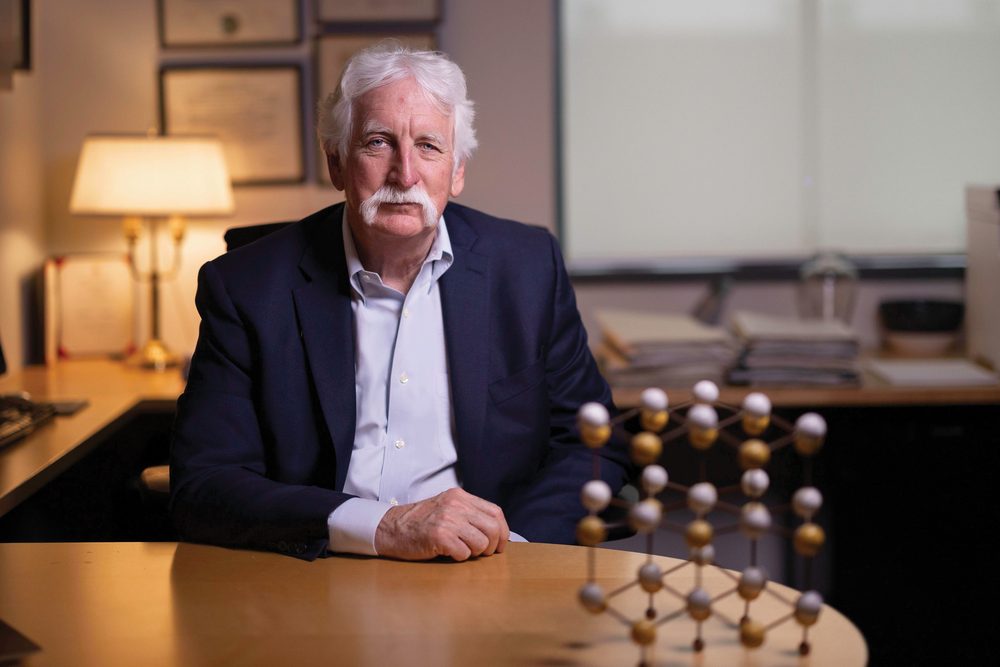
Photo by Dan Renzetti · Yale News
“Decades later, a Yale chemist’s water simulations continue to make waves”
Yale News revisits the 1983 paper that introduced the TIP3P and TIP4P water models — developed on a Harris 80 minicomputer at Purdue, and now among the most-cited scientific papers ever published. It has passed 45,000 citations and sits 88th on a Nature ranking of the most-cited studies of all time.
“Compared to 1980, when we could hardly model water, in 2020 we could design and synthesize a viral inhibitor in months.” — W. L. Jorgensen
Chris Chipot, research director at the CNRS, credits the models’ “simplicity, transferability, and physical soundness” — an argument for what basic, methodologically sound research can return.
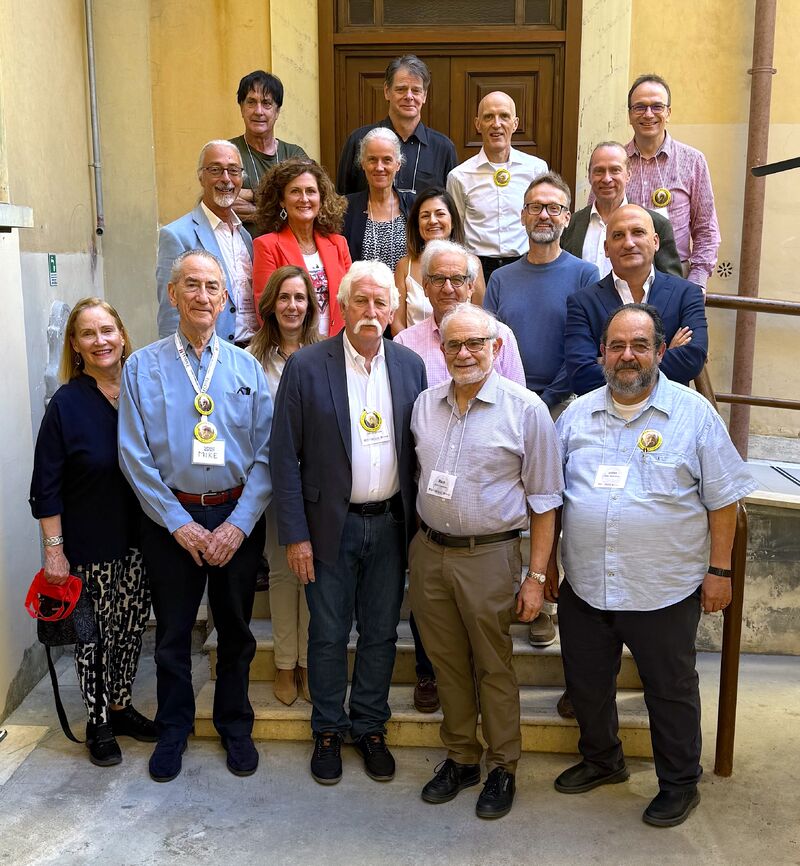
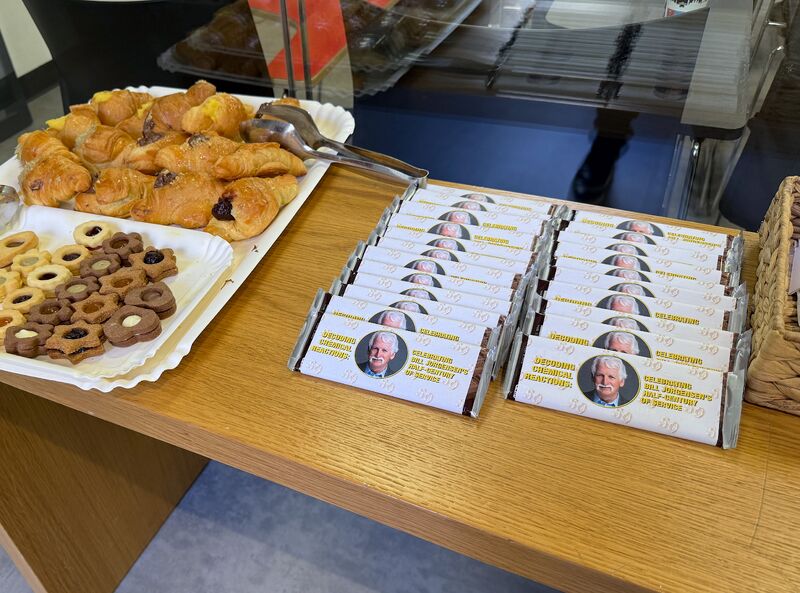
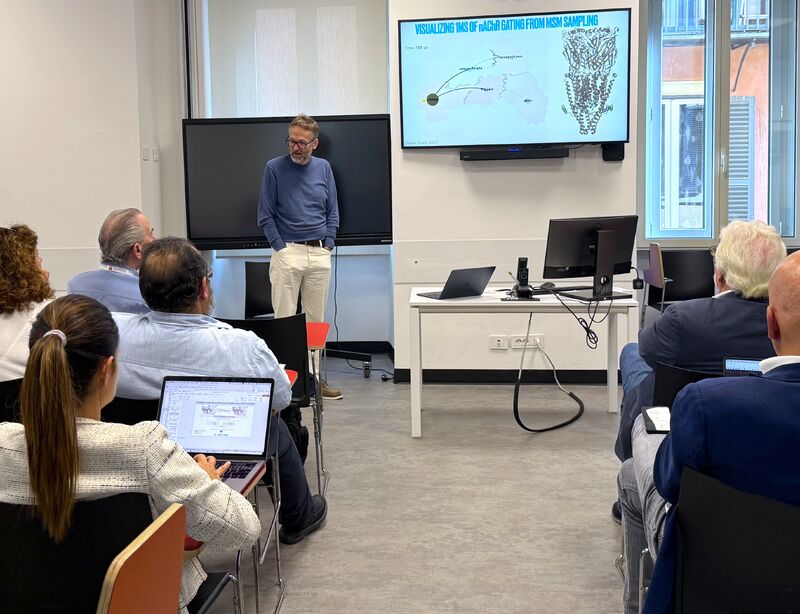
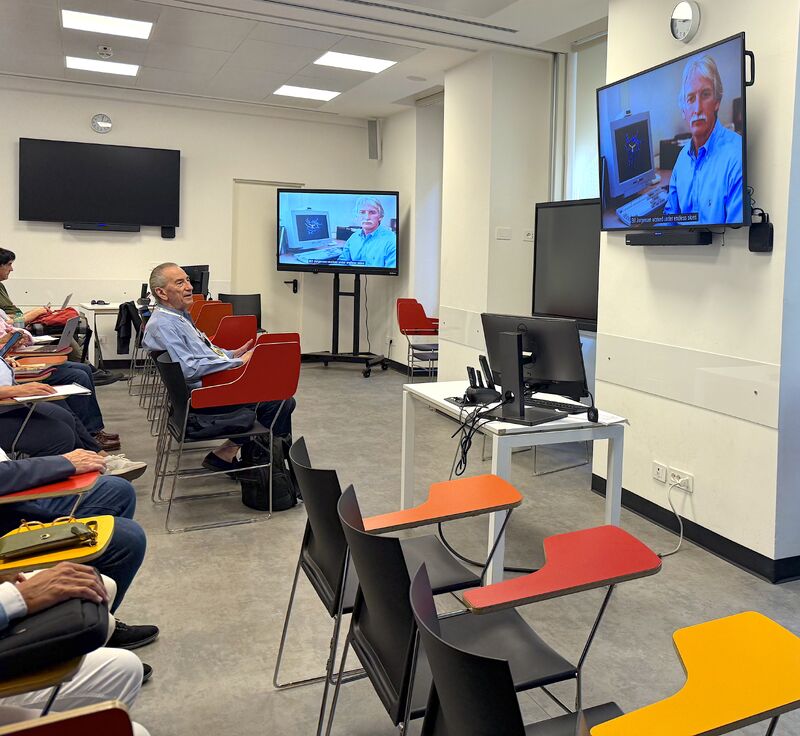
Decoding Chemical Reactions: Celebrating Bill Jorgensen’s Half-Century of Service
26–27 September 2025 · Temple University Rome Campus
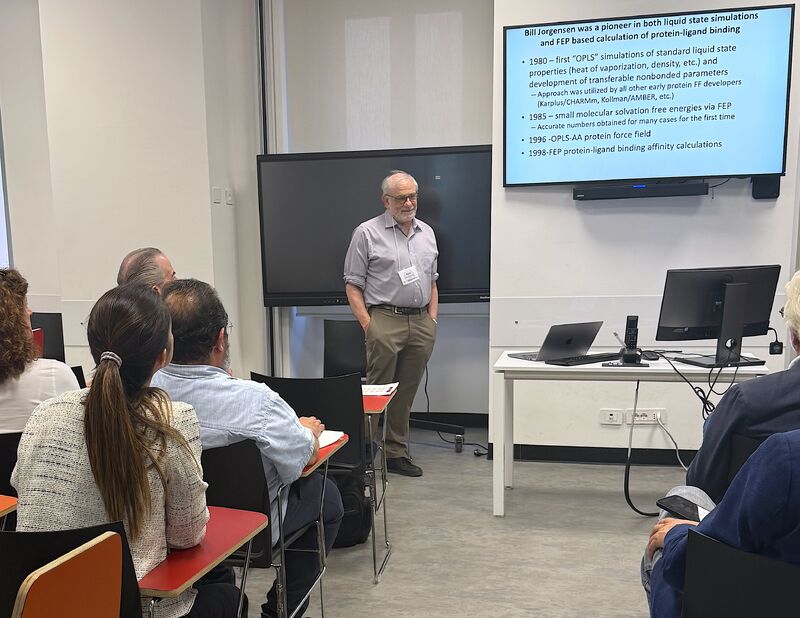
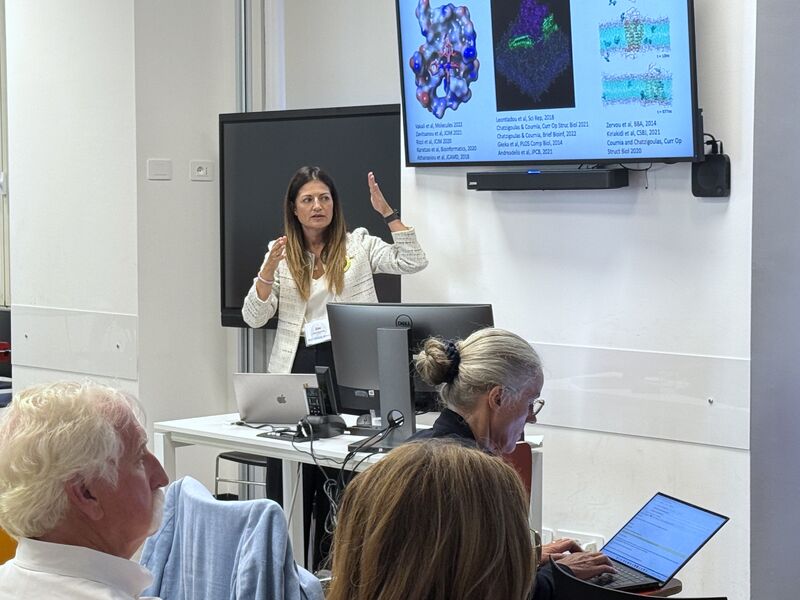
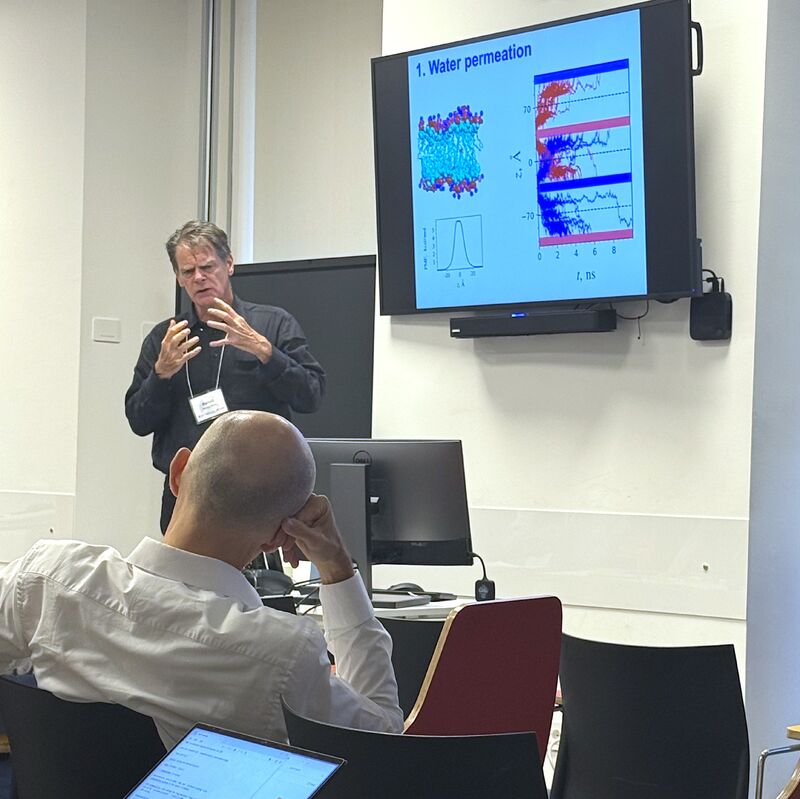
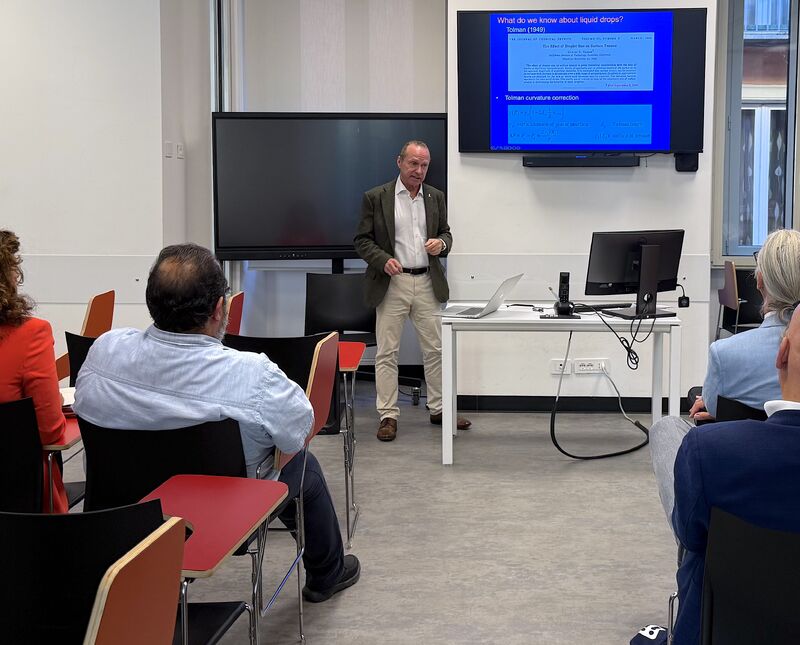
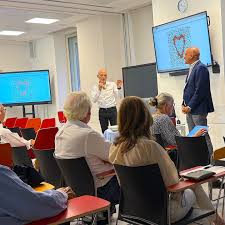
Colleagues, collaborators and former students gathered in Rome for a symposium marking fifty years of Professor Jorgensen’s service — two days of talks spanning the field his work helped create, from liquid-state simulation and force-field development to free-energy calculation and structure-based drug design.
- William L. Jorgensen
- Michael Klein
- Marco De Vivo
- Chris Chipot
- George Jackson
- Zoe Cournia
- Erik Lindahl
- Rebecca Wade
- Modesto Orozco
- Jonathan W. Essex
- Benoit Roux
- Ron Levy
- Richard Friesner
- Thierry Langer

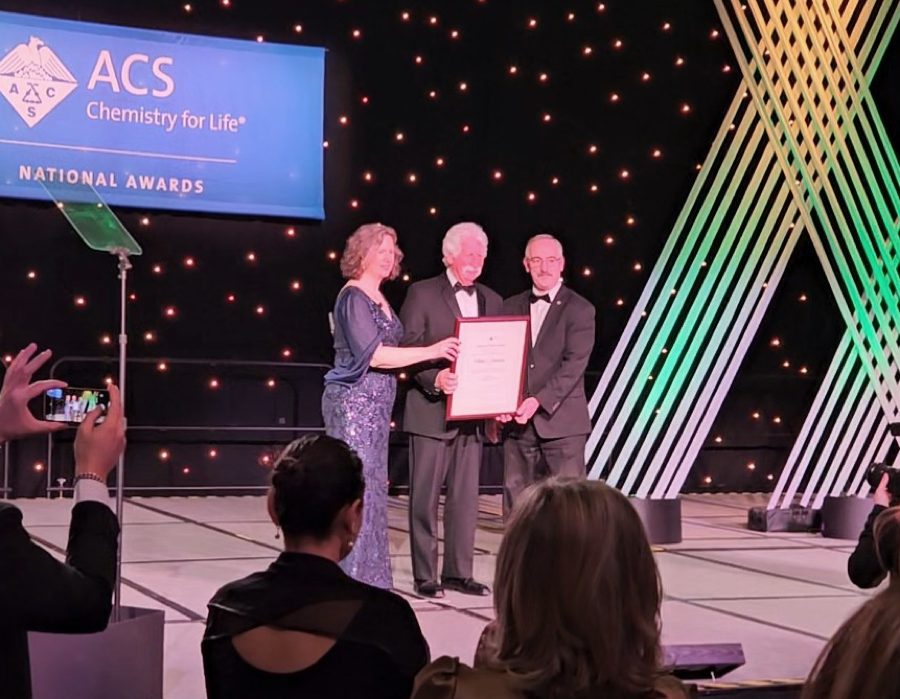
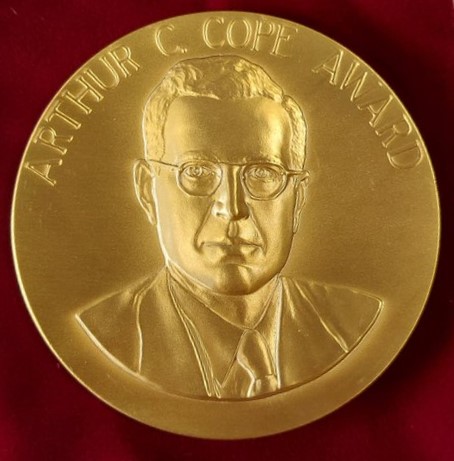
ACS Arthur C. Cope Award
Congratulations to Professor Jorgensen on being awarded the 2024 ACS Arthur C. Cope Award!
“To recognize outstanding achievement in the field of organic chemistry, the significance of which has become apparent within the five years preceding the year in which the award will be presented.”
Read the announcement from the American Chemical Society and from Yale News.
Leadership Summit Cabo Verde — HIV & Covid-19 Groundbreaking Work
Check Professor Jorgensen’s talk at the Leadership Summit Cabo Verde 2023, where he showcases some of his groundbreaking work on HIV and Covid-19. Watch here →
Istituto Italiano di Tecnologia
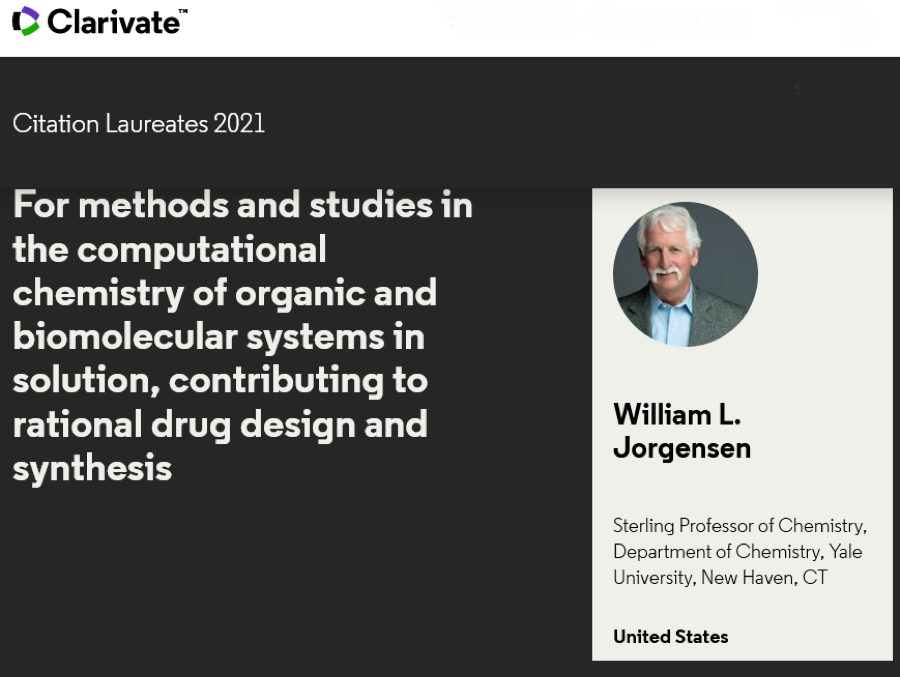
A Sterling Professor of Chemistry at Yale University and a pioneer in computational chemistry, Professor Jorgensen was a guest at the workshop “Challenges in Modeling and Simulations of Nanoparticles in Complex Environments,” organized at the IIT by Marco De Vivo in collaboration with Zoe Cournia and CECAM. He has over 400 publications in the field and has served as Editor of the ACS Journal of Chemical Theory and Computation since its founding in 2005.
Tetrahedron Prize for Creativity in Bioorganic and Medicinal Chemistry
Congratulations to Professor Jorgensen on being awarded the 2015 Tetrahedron Prize for Creativity in Bioorganic and Medicinal Chemistry! See the William L. Jorgensen Symposium in Print.
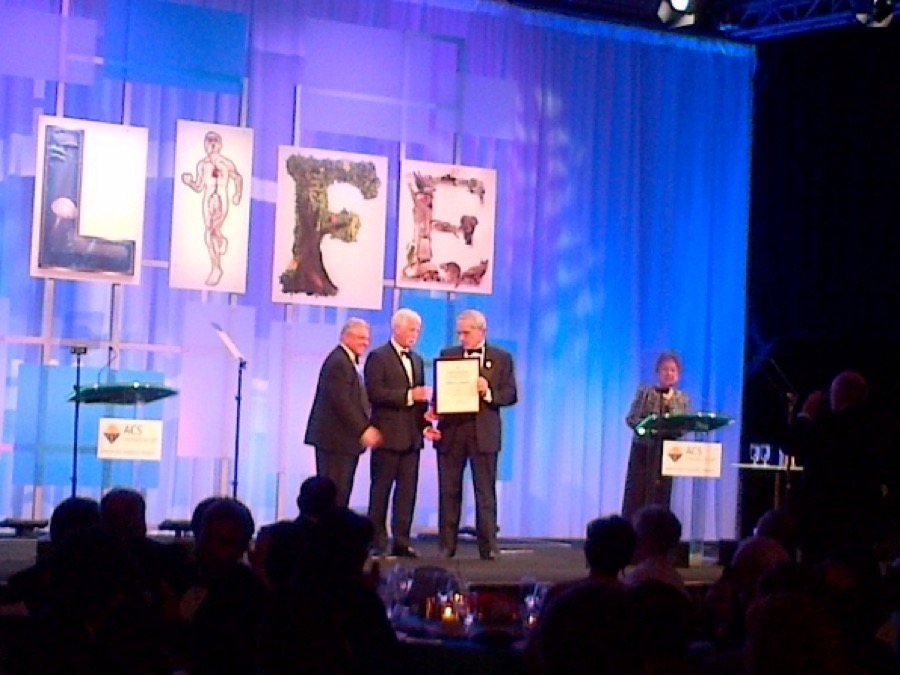
Joel Henry Hildebrand Award in the Theoretical and Experimental Chemistry of Liquids
Congratulations to Professor Jorgensen on receiving the Joel Henry Hildebrand Award in the Theoretical and Experimental Chemistry of Liquids!
This award was sponsored by the ExxonMobil Research and Engineering Company and was presented by Dr. Thomas F. Degnan, Jr., Manager, Breakthrough and Leads Generation, ExxonMobil Research and Engineering Company.
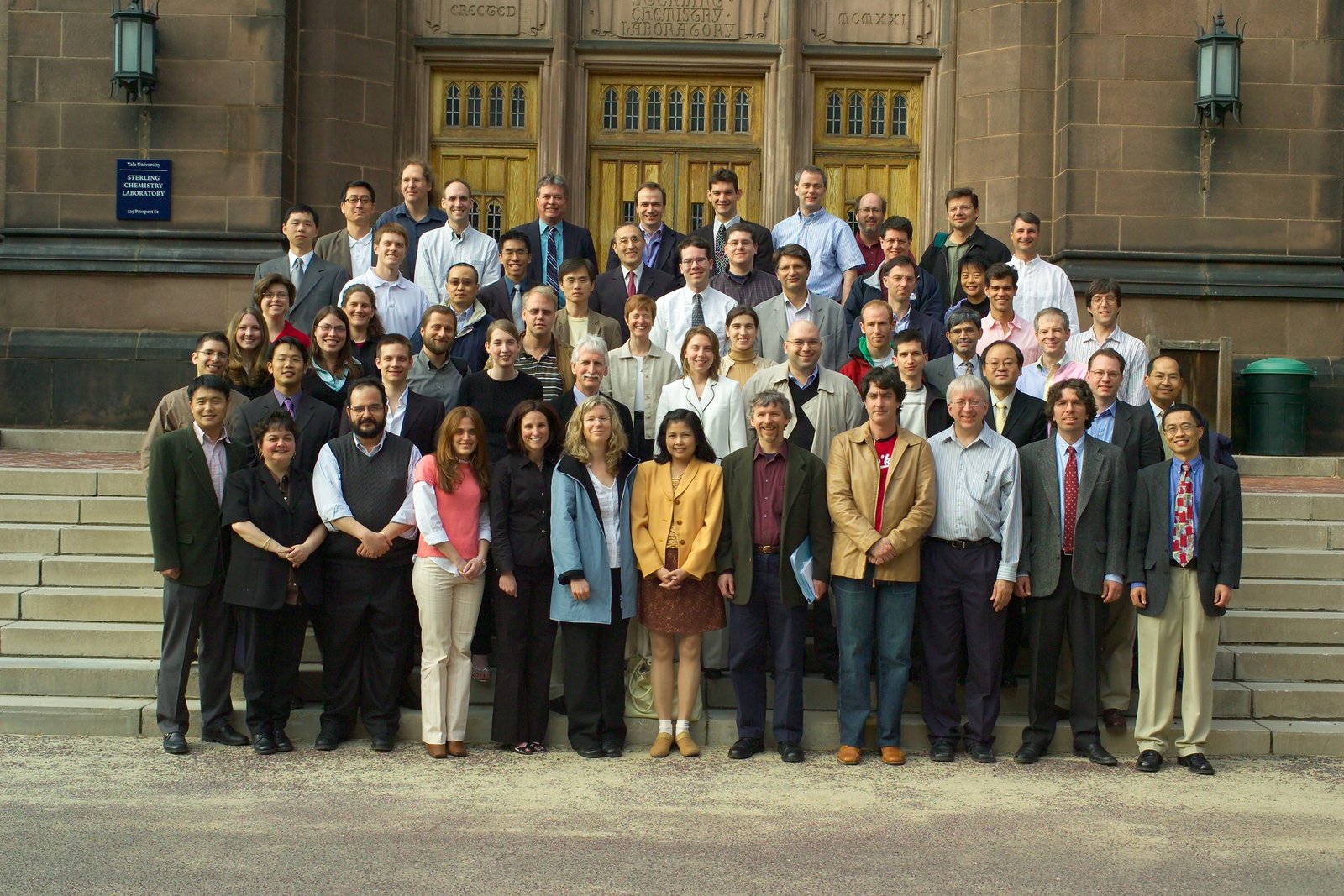
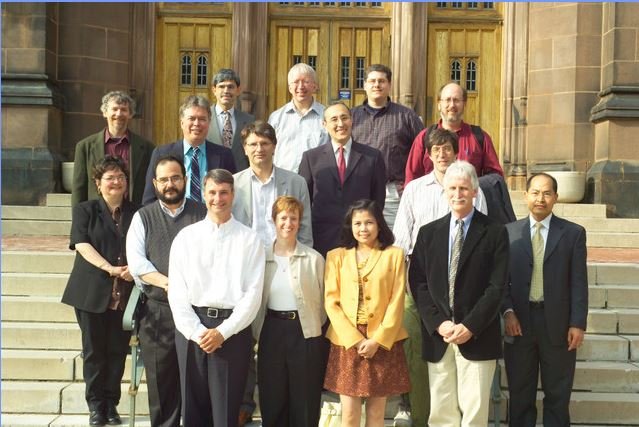
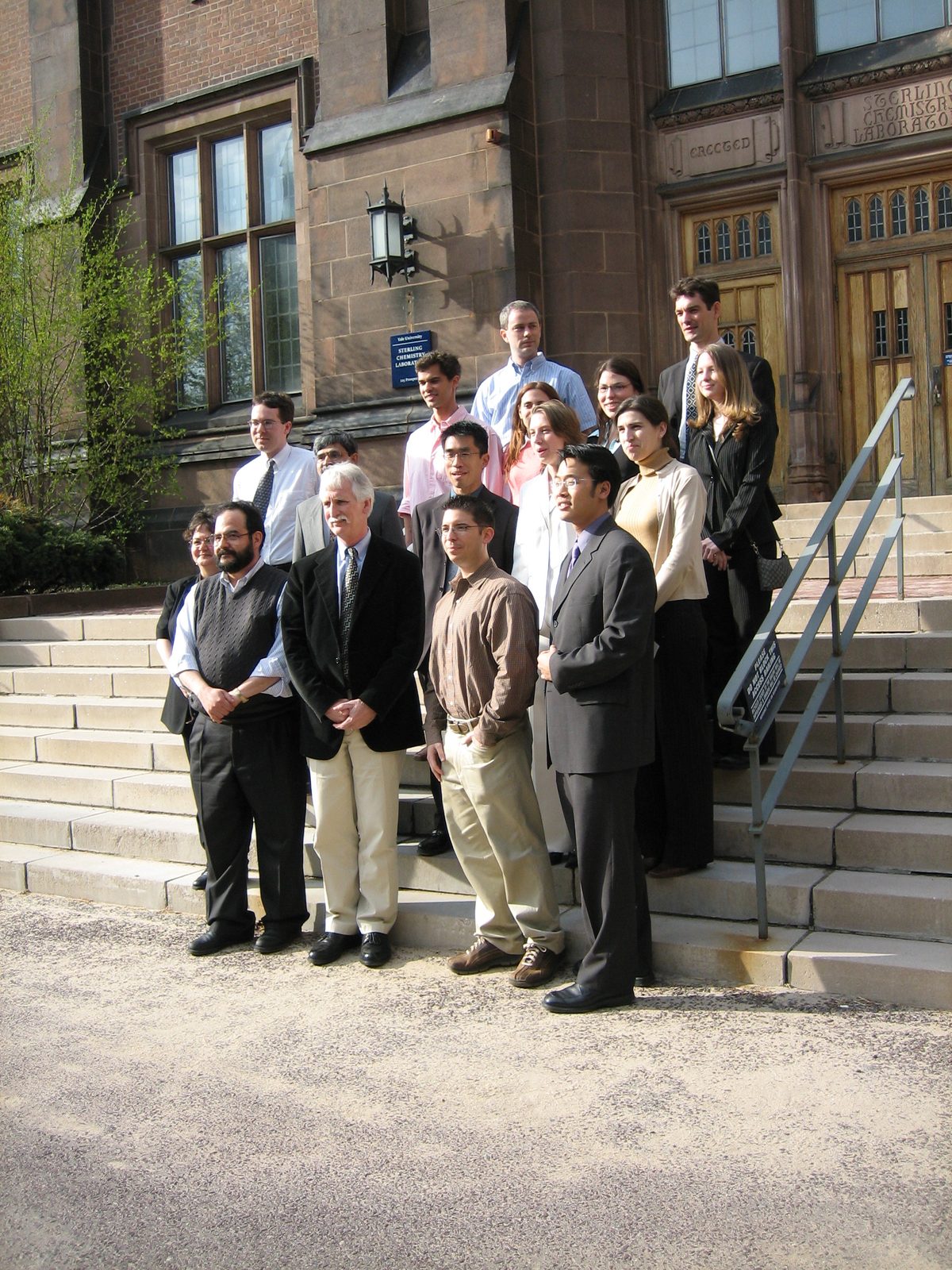
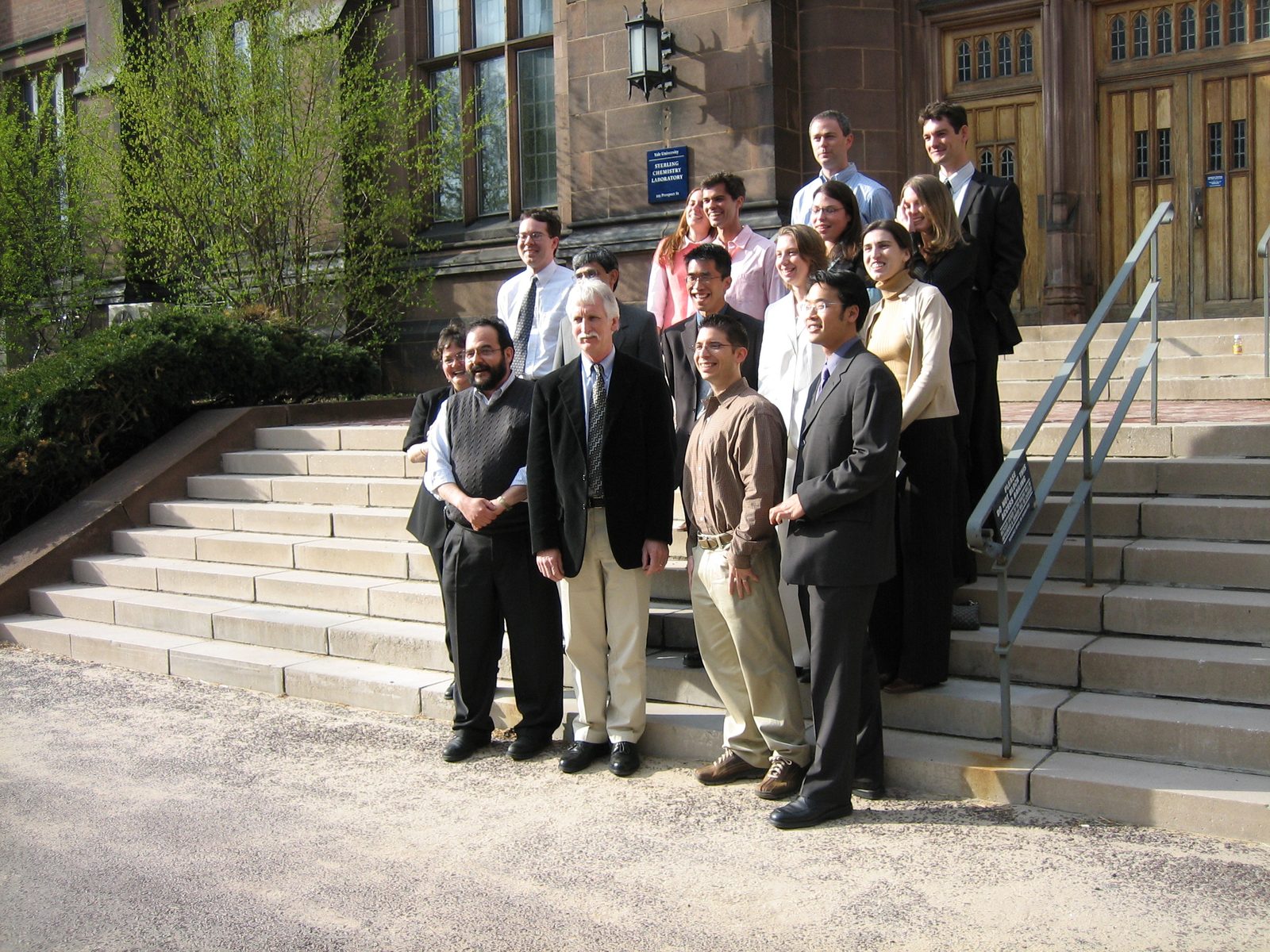
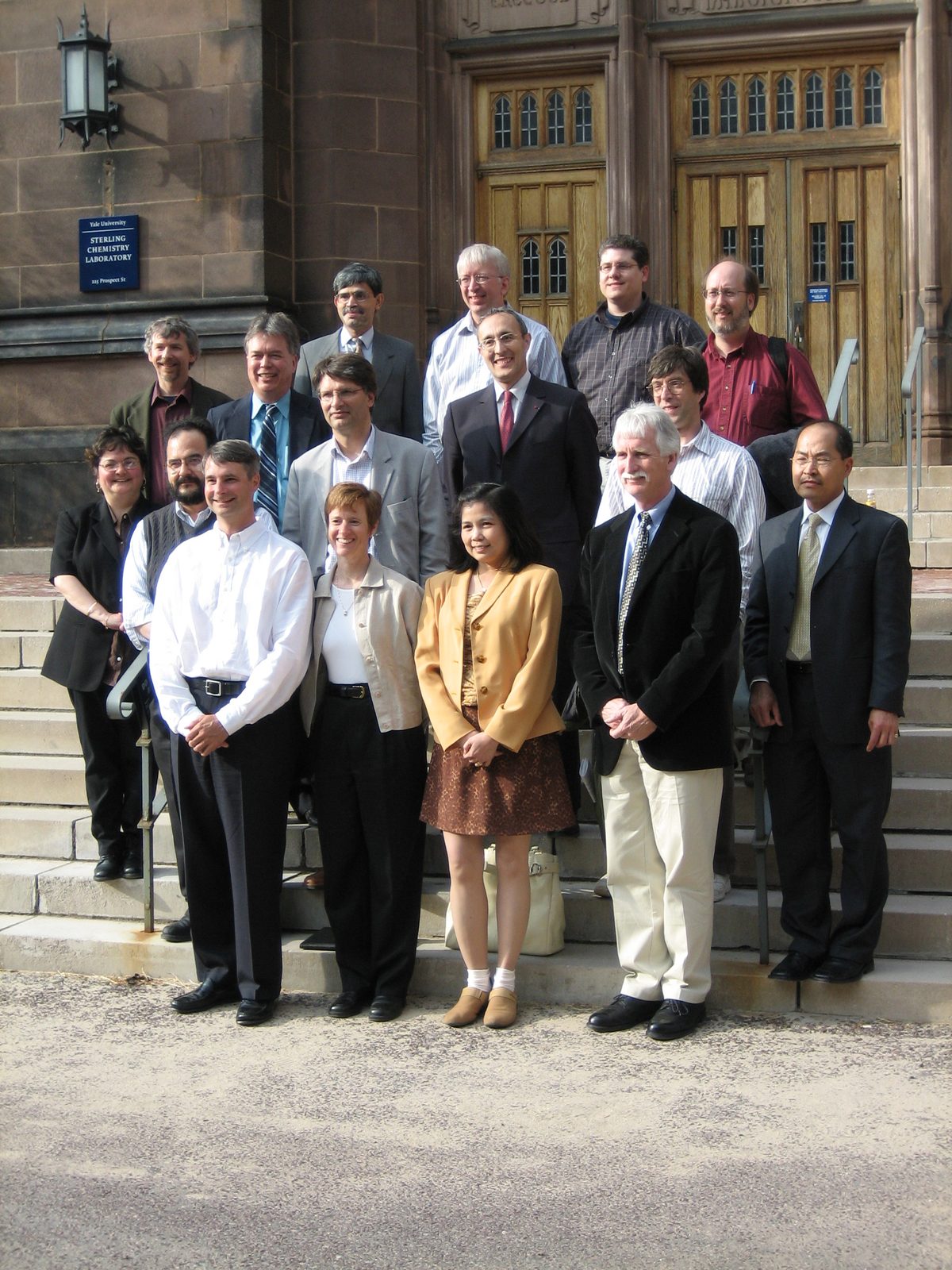
Jorgensen Symposium — “30 Years in the Trenches”
29–30 April 2005 · Sterling Chemistry Laboratory, Yale
The group gathered for the Jorgensen Symposium. See the symposium →