Five decades of contributions to computational chemistry and molecular design.
QM studies of organic ions & ion–molecule complexes
MC for liquids, OPLS force field development
Solvent effects on conformational equilibria
Development of CAMEO for prediction of products of organic reactions
TIP3P & TIP4P water models
Free-energy profiles for SN2 reactions in solution
1st FEP calculation: CH3CH3 → CH3OH in water
FEP for reactions in solution (QM + MM), ΔGhyd, ion-pairing, pKas, log P, hydrophobic effects, etc.
MD and MC for proteins, denaturation, folding, enzymatic rxns
Molecular recognition / organic host–guest complexes
Secondary electrostatic effects for G–C, A–T, etc.
FEP/MC for protein–ligand binding
Full QM/MM for organic & enzymatic reactions
Structure-based drug design, ADME predictions. QikProp licensed by Schrödinger. TIP5P reported.
Semiempirical molecular orbital method development
FEP-guided design and synthesis of enzyme inhibitors
MCPRO licensed by Schrödinger as MCPRO+; the FEP+ line introduced in 2015, carrying free-energy perturbation into routine pharmaceutical use
Discovery of MIF antagonists and agonists
Report of the most potent, non-toxic anti-HIV agents
Determination of X-ray crystal structures for protein–ligand complexes
Report of the most potent, non-toxic inhibitors of human MIF
Discovery of selective binding molecules for the pseudokinase domain of JAK2
FEP-guided design and synthesis of SARS-CoV-2 main protease (MPro, 3CLPro) non-covalent, non-peptidic inhibitors
How readily a molecule dissolves in water versus an oily, nonpolar liquid affects where it ends up in the body — and how tightly a drug can bind its target. A new study computes these free energies of solvation for 101 organic molecules in both cyclohexane and water using Monte Carlo free-energy perturbation. The finding: the simpler united-atom OPLS model reproduces experiment just as accurately as the all-atom model (mean error ~0.5 kcal/mol), while running 5–10× faster.
Put the 2026 united-atom OPLS model to work: enter an alkane — a chain, a branched skeleton, or a ring — and get the energy of every distinct conformer, from chair vs. twist-boat to anti vs. gauche.
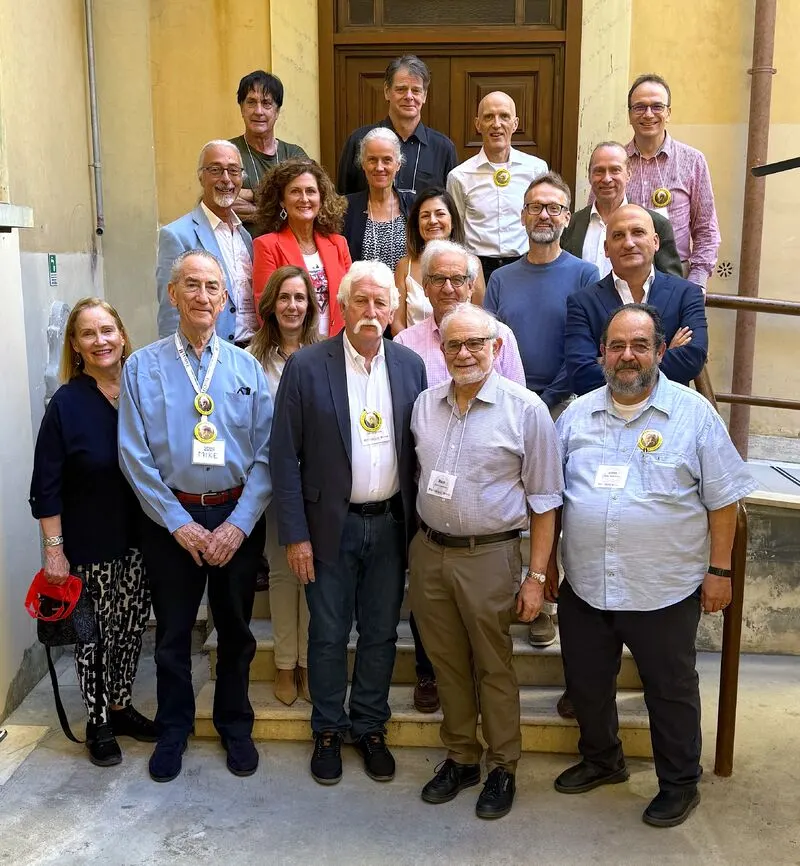
Decoding Chemical Reactions: Celebrating Bill Jorgensen’s Half-Century of Service brought colleagues, collaborators and former students to the Temple University Rome Campus on 26–27 September 2025 — two days of talks spanning the field his work helped create.
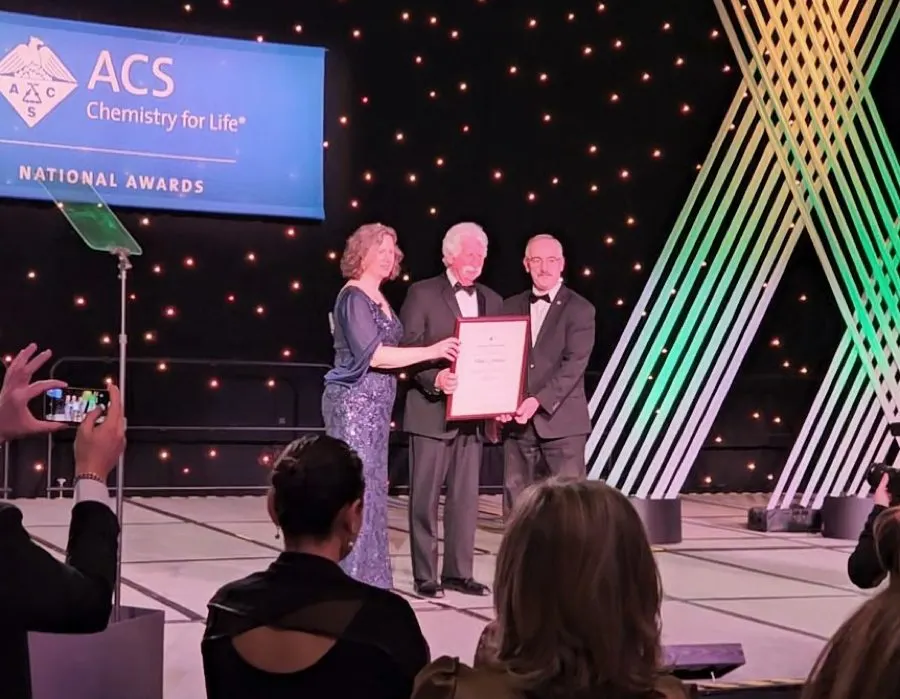
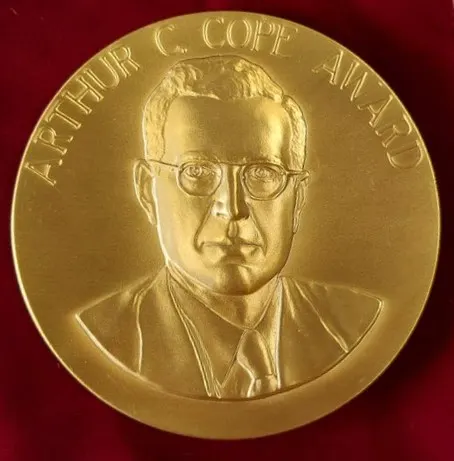
Congratulations to Professor Jorgensen on being awarded the 2024 ACS Arthur C. Cope Award!
“To recognize outstanding achievement in the field of organic chemistry, the significance of which has become apparent within the five years preceding the year in which the award will be presented.”
Read the announcement from the American Chemical Society and from Yale News.
A 2025 history of the field in The Journal of Physical Chemistry B traces the modern practice of alchemical free-energy methods — now central to structure-based drug discovery — through the group's landmark 1985 calculation, drawing on archival letters and interviews from its own records.
The line runs forward too: in 2006 Schrödinger licensed the group's MCPRO as MCPRO+, and FEP+ — the binding-affinity tool now used across the pharmaceutical industry — was introduced in 2015.
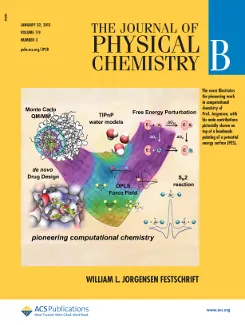
The Journal of Physical Chemistry B — January 22, 2015, Volume 119, Issue 3, Pages 621–1232. View issue →
Festschrift Preface includes:
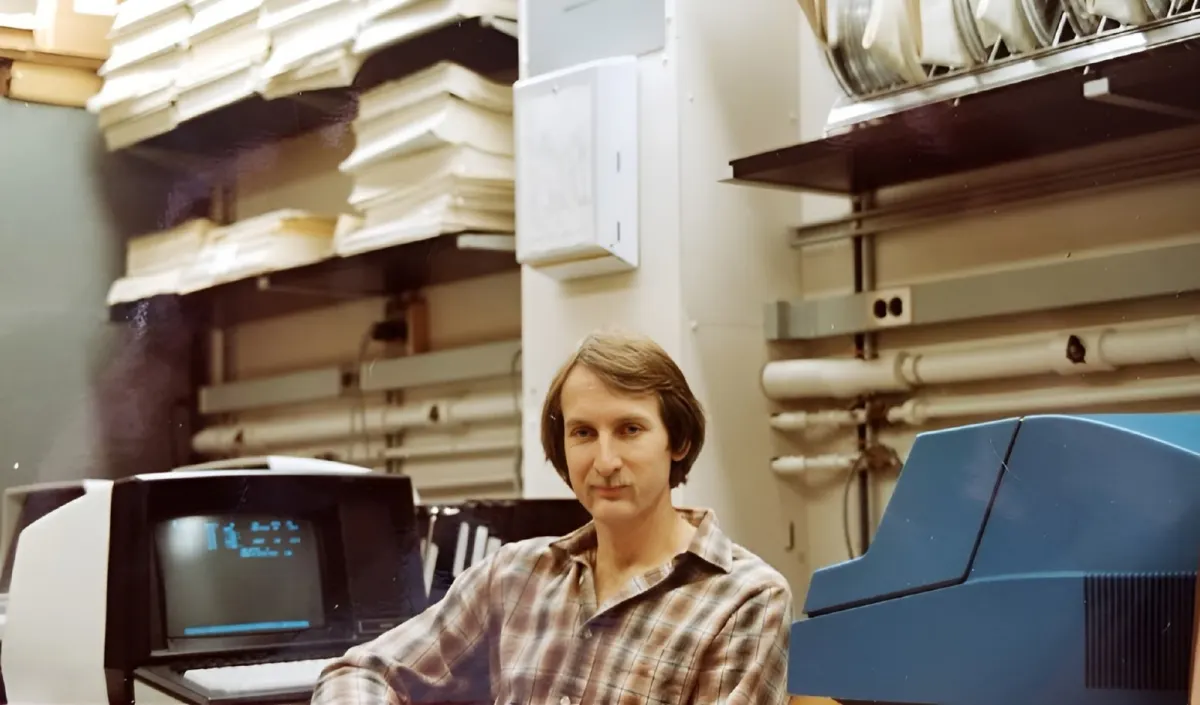
The group through the years → Photos from 1980 to today, with the faculty and staff of the group and the 162 graduates, postdoctoral fellows and undergraduates who have trained in it.